Yemen's mud-brick towers: 30 metres tall and built 300–500 years ago
Some of Yemen's mud towers rise about 30 metres and were built 300 to 500 years ago. Here's why people built up, not out, in the desert.
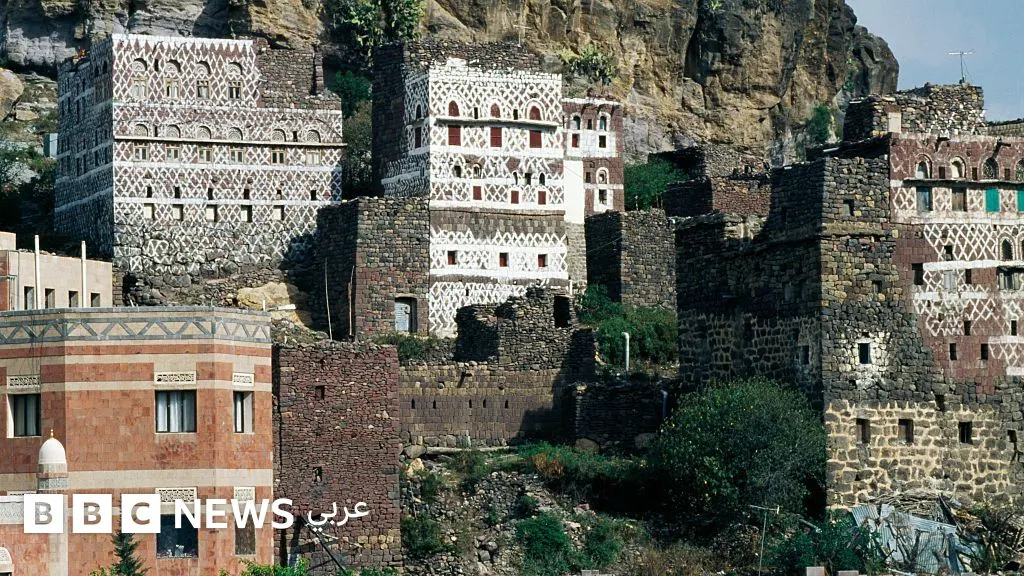
Walk through Bab al-Yemen, the huge gate into the walled Old City of Sana'a, and it feels like stepping into another world. Then you look up. Narrow houses, some with just one or two rooms per floor, climb as high as seven storeys.
They are made of mud. Some were built 300 to 500 years ago, and the tallest reach around 30 metres. That is slightly less than the first modern skyscrapers in Chicago.
What makes these towers so special?
At street level you see mostly plain mud-brick walls and big wooden doors. The lowest floors have no windows, because they were used as animal shelters or workspaces. Higher up, decorated windows are fitted with coloured glass or thin screens that protect the privacy of the women inside. The frames are painted white with lime to stand out against the earthy walls.
Many homes have roof spaces for relaxing, and even for sleeping outdoors on warm nights. The towers exist in villages and cities alike, including Shibam, which explorer Freya Stark nicknamed the "Manhattan of the desert" in the 1930s. Shibam, Zabid and Old Sana'a are all UNESCO World Heritage Sites (the UN's cultural protection list), listed in the 1980s.
Why build up in the middle of a desert?
Because space was tight. Towns had outer walls and desert beyond them, and the few patches of farmable land were too precious to build on. So people built tall and close together.
Security mattered too. According to anthropologist Trevor Marchand, towers also offered protection against invading forces, tribal conflict and civil war.
Mud also works as natural air conditioning. Architecture professor Ronald Rael explains that earth absorbs the sun's heat by day and releases it slowly at night. Window screens let in breeze and light, but not much heat.
Builders did it without scaffolding. They laid a stone foundation about two metres deep, stacked mud bricks in an interlocking pattern, and added wooden beams and palm-material floors floor by floor.
Can these buildings survive?
Architect Salma Samar Damluji warns that these skills are close to disappearing. Wind erosion, war and economic hardship stop families from maintaining fragile homes. In 2020, UNESCO surveyed about 8,000 of these buildings and restored 78 that were close to collapse.
For people who live in them, they are more than monuments. "In Yemen they remain homes," says peace advocate Arwa al-Meqdad, who is proud to live in a house kept by generations of ancestors.
Story timeline
Yemen's ancient mud-brick skyscraper cities · 3 updates
What happened before and after this story. Background events not previously covered were summarised by AI.
More in: Culture
See all →
Flying Free: the club anthem built on purpose now gets a documentary

Musket balls from 1794 found in central Warsaw, and that's not all

Çakallarla Dans director on why he makes big decisions in Berlin, not Istanbul