A WWI soldier's love letters, bought at auction, bring a town together
Gunner Willie Webber wrote 100 letters to his new wife before he was killed weeks before the Armistice. Now a Welsh border town is remembering him.
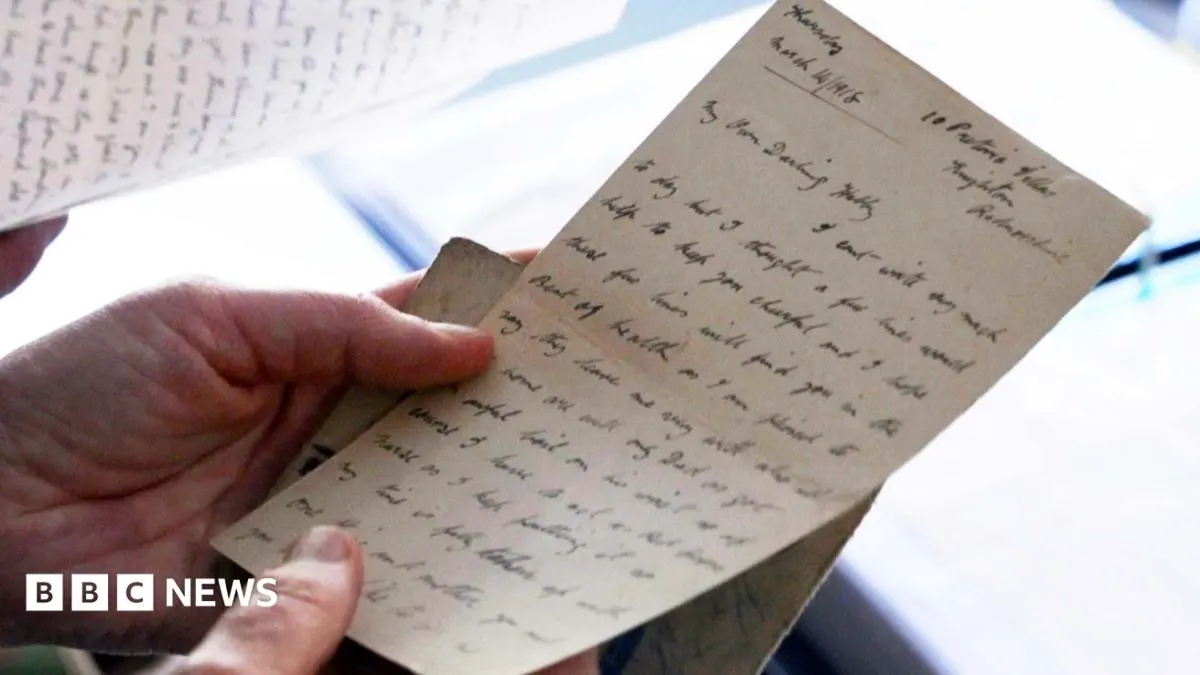
"My darling girl, you are everything to me." Gunner Willie Webber wrote those words to his wife Gladys from the Western Front more than a century ago. Now, on Armistice Day, a whole town is remembering him.
What happened?
Willie and Gladys married at St Edward's Church in Knighton, Powys (a town on the Welsh border), in December 1917. They had very little time together. Willie, a gunner with the Royal Garrison Artillery's 297th Siege Battery, went back to the front line in France.
He wrote often. In 100 letters, dated December 1917 to October 1918, he sent pressed flowers, tender messages and plans for the future. He signed off: "Your own true hubby & loving sweetheart. Willie."
The reunion never came. In October 1918, just four weeks before the Armistice, Willie was killed in an accident when his gun backfired. He was 25. The couple had no children, so nobody was left to tell their story.
How did two strangers change that?
In 2025, the letters went up at an online auction. Andy Garner, a mechanic from Norwich who collects and transcribes wartime letters, kept coming back to them. In the final seconds, he won with a bid of £351.51.
Then Keith Budgen, who had sold the letters, decided he could not keep the money. He contacted Andy the next morning and offered it back. "It's the right thing to do," he said.
The two men bonded over the letters and had an idea: commemorate Willie in Knighton, where he and Gladys had married.
What did the community do?
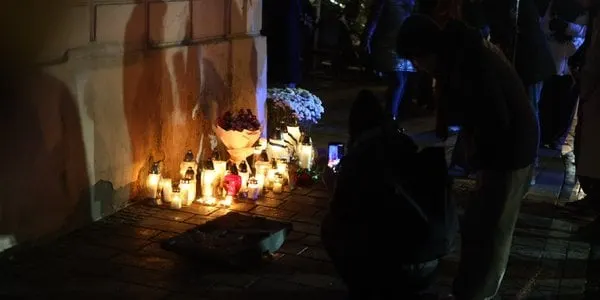
Supporters raised £1,600 for a memorial bench at St Edward's in just two-and-a-half weeks. The church organised a remembrance service. Bell-ringers created a special tribute, a bugler volunteered to play, and the Royal British Legion, a charity supporting the armed forces community, lent a hand.
Ian Ferguson of the Legion said Willie was not on any cenotaph, either in his home town or in Knighton, which made the idea feel right. Lynn Scales, who made a special standard for the bell-ringers, said Willie "sounds like he was doomed to be forgotten - but not any more."
What's next?
Andy still plans to publish the transcripts, so the letters can be read by others. His wife Lex said that once he spreads the word, people want to help. "Willie and Gladys were just regular everyday people," she said, "and for someone to actually take that time to remember them, I think it's beautiful."
Story timeline
WWI love letters of Willie and Gladys Webber · 2 updates
What happened before and after this story. Background events not previously covered were summarised by AI.
More in: Society
See all →
NewJeans contracts lacked schooling and sleep clauses, NYT report claims

'Ambient' sexual harassment at work: what France's top court clarified

Six weeks into France's student protests, uncertainty is taking a toll on mental health