Six weeks into France's student protests, uncertainty is taking a toll on mental health
Young people marching in Paris say juggling protests, unclear classes and fear of police violence leaves them anxious and exhausted, yet still hopeful.
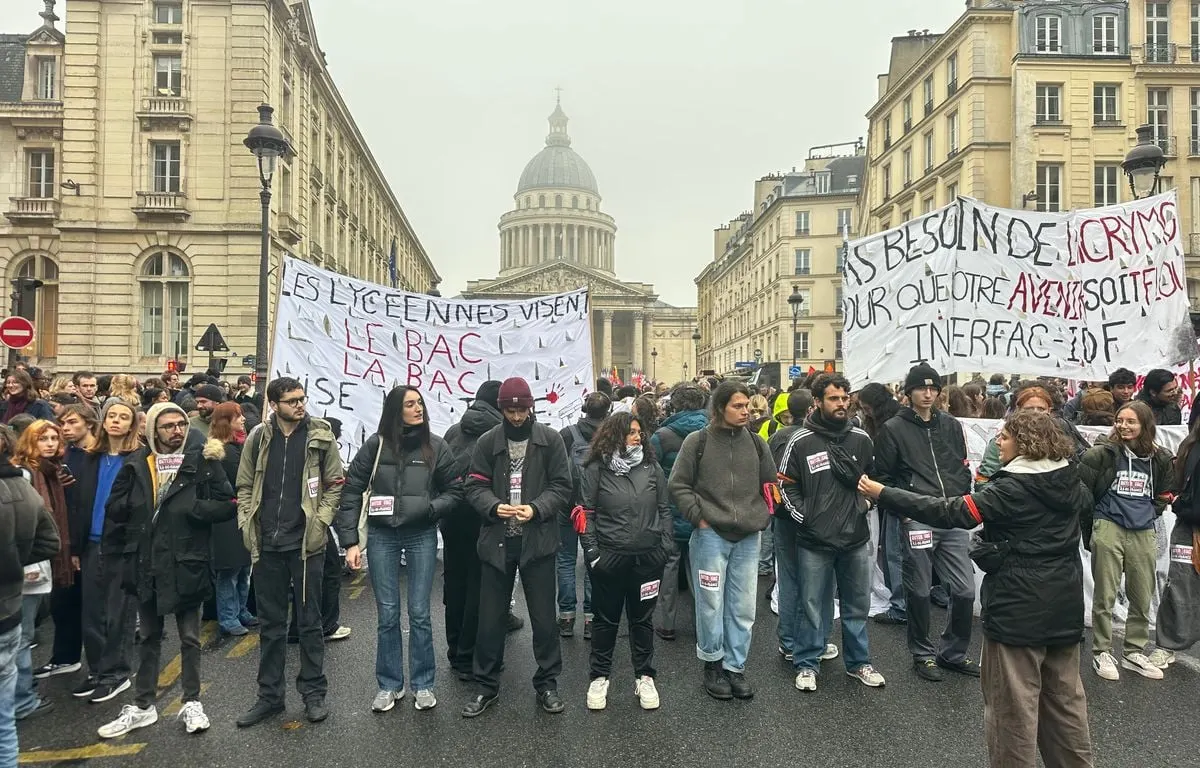
"The general context is pretty depressing. When you look at our future, you don't see much." Clarisse, 19, sums up how a whole generation feels. She was marching in grey, rainy Paris on Tuesday, more than six weeks into a protest movement that began with high school students in September.
One third of French 11-to-24-year-olds show signs of anxiety or depression. After weeks on the streets, some young protesters admit the movement is weighing on them too.
What are they saying?
The march gathered pupils, students and teachers on rue Soufflot, in Paris's 5th arrondissement, to protest their learning and teaching conditions once again. Police estimated the Paris crowd at nearly 6,000 people. According to the Education Ministry, 1.55% of its staff went on strike.
Studying right now is "super complicated", says Clarisse, a Sorbonne student. Some days there are protests, some days online classes, some days nothing. "It generates anxiety, you don't know where you're going."
Her friend Colombe puts it like this: the baccalauréat (France's school-leaving exam) doesn't guarantee a bachelor's, a bachelor's doesn't guarantee a master's, and a master's doesn't guarantee a job. "I feel like we're a bit abandoned."
One banner read: "No need for tear gas for our future to be blurry." Raven, a theatre student, says he often feels stressed and sleeps badly. "Uncertainty turns into anxiety, and for those who are already fragile, it's even harder."
Fear of police violence
For many, the policing of protests is the heaviest part. Nathanaël, 15, was tear-gassed at his first march, and a grenade landed right next to him. He says he has toughened up, but admits: "When my mum marches, I'm not reassured."
At Sorbonne Nouvelle university, students and teachers say a general assembly on 5 October was violently dispersed by police and that they were kettled for hours. Adèle says it reactivated post-traumatic stress she already had. "I still have nightmares."
Victoria, a third-year Spanish student, describes "fear, tears, constant tiredness". Emma says the movement has taken over: "We think about it all the time. We no longer have a life outside it." Missing a march can bring guilt too.
Why do they keep going?
To cope, Emma says, people seek comfort anywhere. Some friends are rewatching series they loved at 12.
Yet she also says that "the fight helps mental health get better". Everyone we spoke to shared that feeling. They keep mobilising, they say, because they still have hope.
More in: Society
See all →
Almost 10 million zloty raised after the Kraków attack, most for two police officers
Spain will create an official single-parent family status, with large-family perks
Bunker Roy, who founded Barefoot College, dies at 81 in Tilonia