Why Hello Kitty still melts hearts, from Tokyo to a Paris gallery
A Paris exhibition running until 26 November explores why Hello Kitty, born in Japan in 1974, still comforts a generation looking for a little softness.
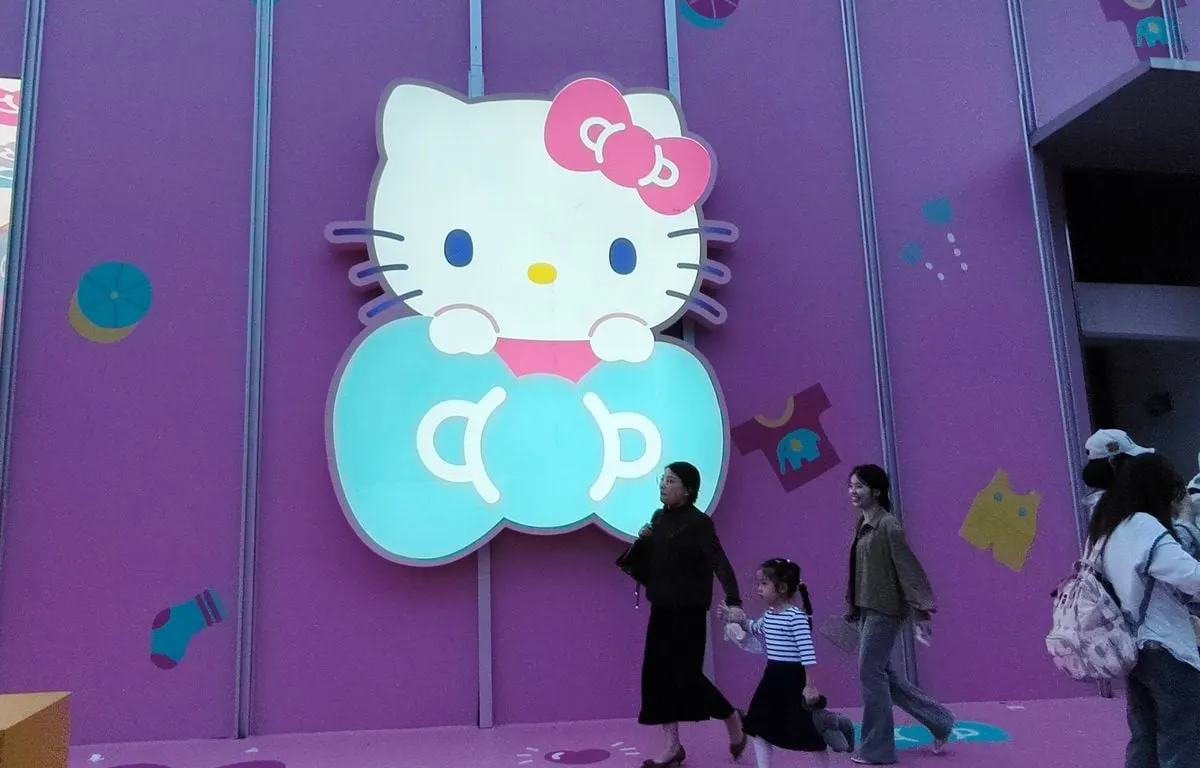
She has no mouth, she never says a word, and she is somehow everywhere. Hello Kitty is the star of "Hello Kitty: Beyond Cute", an exhibition at the Galerie Joseph in Paris's Marais district, open until 26 November.
What's on in Paris?
The show dives into "kawaii", the Japanese word for "cute". It stands for a culture of tenderness and pastel colours. And it lands at a moment when many young French people want an escape.
Last year the Secours populaire (a major French charity) reported that one young person in two in France expresses strong anxiety about their present situation and their future. Online, fans show off their strangest Hello Kitty items on TikTok, and singer Zara Larson has worn cat-inspired makeup. Everyone seems "obsessed" right now.
How did a little white cat conquer the world?
Sanrio, the Japanese company behind her, launched Hello Kitty in 1974, first on a vinyl coin purse. The character was drawn by designer Yuko Shimizu after founder Shintaro Tsuji asked for something "cute". Nobody expected what came next.
More than 50,000 products have since carried her face. The brand has generated nearly $90 billion and is sold in more than 130 countries. She has flown aboard the Japanese satellite Hodoyoshi-3, teamed up with UNICEF and turned up on NBA courts. Balenciaga, Nike and McDonald's have all queued up to work with her.
The secret may be her blank face. "She has no mouth, she doesn't smile, she doesn't impose emotions," says Élodie Gentina, a researcher at the IÉSEG School of Management. You can look at her when you're happy, sad or nostalgic, and she always seems to understand. The brand's line is that she "speaks with her heart".
Soundes, a communication student in Montpellier, remembers the cartoon having almost no dialogue. "It could speak to every little girl in the world," she says.
Why does she matter now?
War, empty bank accounts and an uncertain future: Hello Kitty feels like a soft place to land. In a Sanrio survey, 76% of young French people said "cute" moments comfort them on hard days. Gentina sees a search for immediate pleasure and a bit of lightness.
"With the tense context, you look for an escape," Soundes admits. She still keeps the plush toys and stickers she has had since childhood.
According to Gentina, that blurred line between childhood and adulthood is typical of Gen Z. They don't want to become children again, she says. They want the right to keep a part of childhood in their adult lives.
The nostalgia will carry on at the cinema: a Hello Kitty feature film is due in 2028.
Story timeline
Hello Kitty Beyond Cute exhibition in Paris · 2 updates
What happened before and after this story. Background events not previously covered were summarised by AI.
More in: Culture
See all →
Flying Free: the club anthem built on purpose now gets a documentary

Musket balls from 1794 found in central Warsaw, and that's not all

Çakallarla Dans director on why he makes big decisions in Berlin, not Istanbul