Tame Siberian foxes have fewer 'aggression' neurons, a new brain study finds
Decades of breeding friendly foxes in Siberia have revealed a brain difference linked to aggression. Whether it explains their tameness is still unknown.
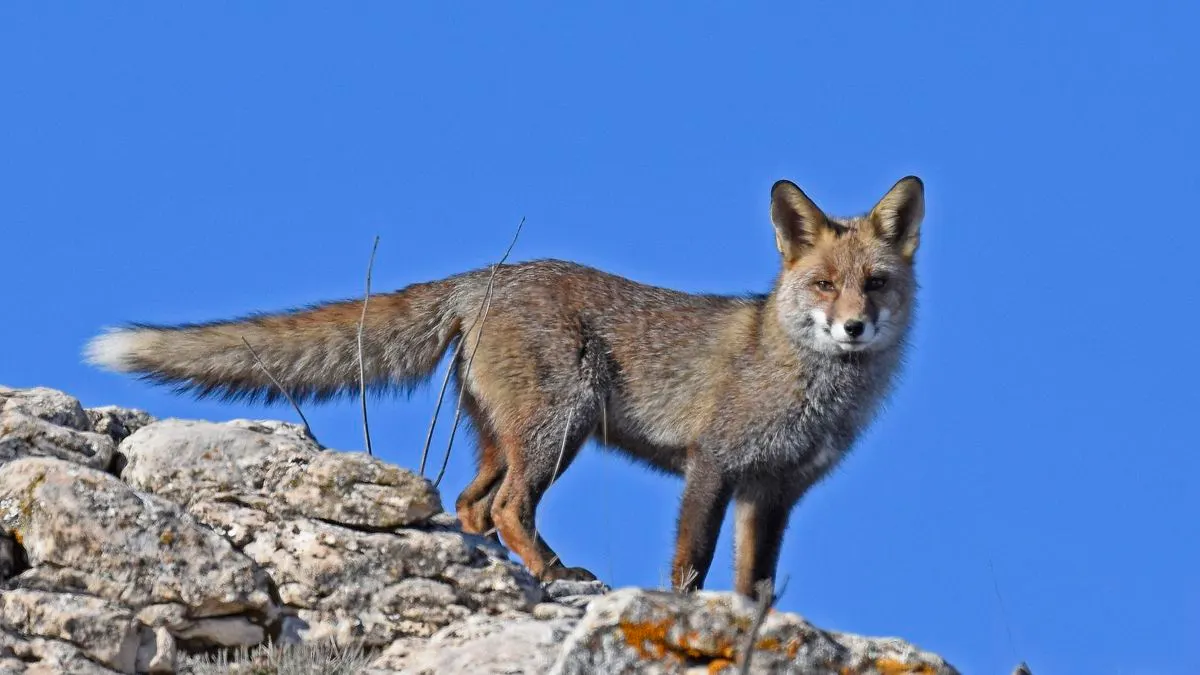
Silver foxes and red foxes are the same species, just with different coats. But some of them ended up in one of the most famous animal experiments ever run. Now a peek inside their heads has turned up a curious clue about aggression.
What happened?
Researchers at Cornell University compared the brains of Siberian foxes bred for opposite temperaments. Their study, published in Current Biology, found fewer of a specific type of neuron in tame foxes than in aggressive ones.
The cells sit in the ventromedial hypothalamus, a region at the base of the brain that also handles social behaviour, maternal instincts and energy use. They carry a protein called estrogen receptor alpha. In earlier mouse experiments using optogenetics (a technique that switches neurons on with light), activating these cells made a mouse attack another one. "If you activate them, the mouse will immediately attack another mouse," said lead researcher Eirene Markenscoff-Papadimitriou.
How did the experiment start?
In the late 1950s, Soviet geneticist Dmitri Belyaev and Lyudmila Trut began breeding the friendliest foxes on Siberian fur farms. After six generations, pups were actively seeking human contact. Some had floppy ears and shorter snouts. In 1970, the team also started selecting aggressive foxes, creating two groups with opposite behaviour.
The new work used nine brains from the Russian colony: three tame, three aggressive and three wild. Thin tissue slices were treated with fluorescent probes that detect RNA, which helped identify the cell types.
So, is this the secret of tameness?
Not yet. Nine brains is a small sample, and nobody has tested what these neurons do in living foxes. That means cause and effect remain open.
Earlier research already complicated the picture. A 2021 study of 30 brains found both tame and aggressive foxes had more grey matter than unselected ones. A 2020 review also questioned whether every bodily change credited to the experiment really began there.
Next, Anna Kukekova of the University of Illinois Urbana-Champaign will study how genetic mutations could affect these cells. The big question is whether fewer of them help make foxes friendly, or are just a side effect of selection. Dogs may offer hints: a study of 1,987 and 722 dogs suggests selection for less fearful, less aggressive behaviour was widespread across major breed lineages.
Story timeline
Siberian tame fox experiment and aggression · 3 updates
What happened before and after this story. Background events not previously covered were summarised by AI.
More in: Curious
See all →
Two goats got a job at a Tokyo train station, and commuters are watching

He found a Renaissance facade in his new house and will get over €1 million

Tokyo station hires two goats to mow its weeds, and commuters can't look away