Delhi wakes up to 'very poor' air after Diwali, with some areas above 400
The morning after Diwali, Delhi's average AQI was 376, and Sonia Vihar hit 449 as firecracker smoke piled onto air that was already bad.
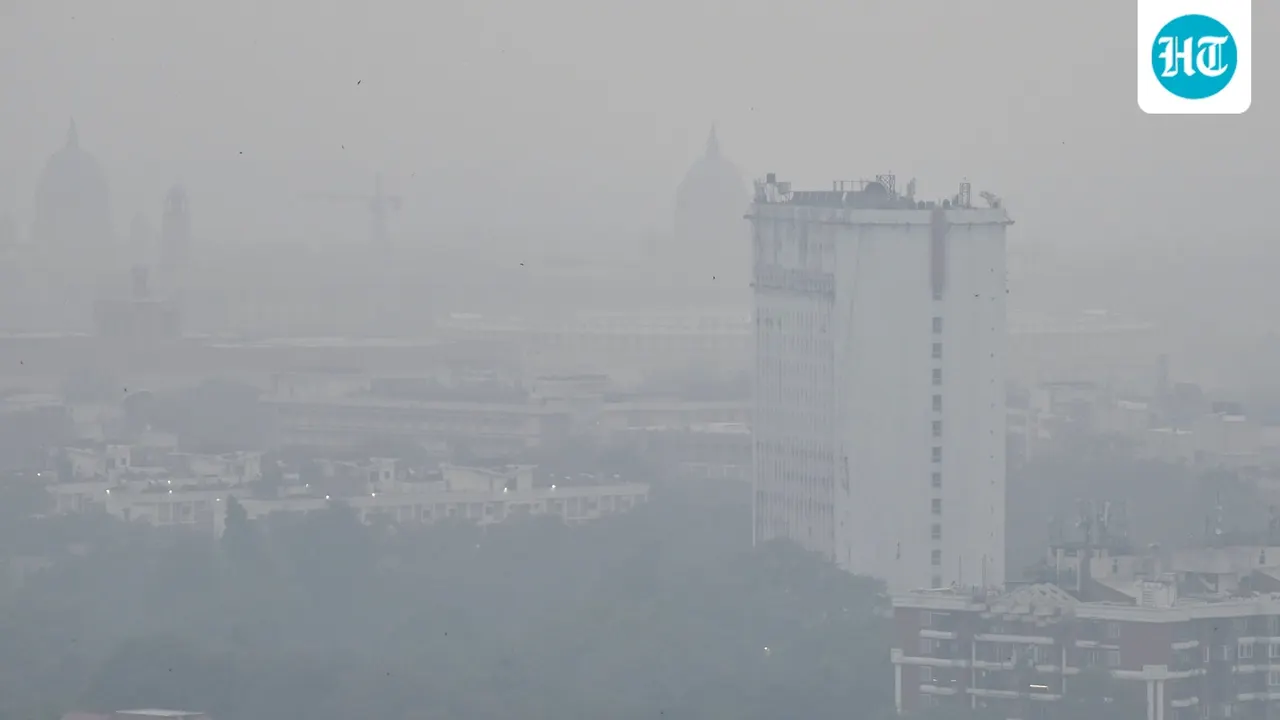
If you hoped the morning after Diwali would bring a breath of fresh air, Delhi had other plans. At 7 am on Monday, the capital's average Air Quality Index (AQI) was 376, which falls in the 'very poor' category.
What happened?
That figure comes from the Sameer app of the Central Pollution Control Board (CPCB, India's national pollution regulator). Several neighbourhoods were far worse, with readings in the 'severe' band, which starts at 401.
Sonia Vihar had the highest AQI at 449, followed by Burari Crossing at 445 and Vivek Vihar at 441. Jahangirpuri recorded 439, Delhi University's North Campus 437 and Rohini 435. ITO touched 406 at 4:20 am.
The wider National Capital Region (NCR) didn't escape either. Ghaziabad averaged 369, Noida 338, Gurugram 312 and Faridabad 329, all 'very poor'. Greater Noida was a little better at 297, which is 'poor'.
How did it get here?
The air was already 'very poor' at 5:30 pm on Diwali day, before firecrackers were burst in large numbers. Then it got worse. Average PM2.5 (fine, lung-penetrating particles) across 39 stations rose from 190 µg/m³ just before 8 pm to 259 µg/m³ from 8 pm. That is more than four times India's 24-hour standard of 60.
Sunday's average AQI was 376, up from 369 the day before. Delhi's decision support system said transport was the biggest source of pollution on Sunday, at 19%, while stubble burning added about 3.5%. Experts also point to slow-moving air: low wind speed and a weak ventilation index make it hard for pollutants to disperse.
What about the firecracker rules?
On November 2, the Supreme Court allowed certified green firecrackers in Delhi-NCR only between 6 am and 7 am and 8 pm and 10 pm on November 7 and 8. A complete ban returns from November 9.
The court said the earlier blanket ban hadn't clearly improved air quality or stopped illegal sales, and that conventional crackers were being sold as 'green' ones. It said the real problem is enforcement. A year earlier, in October 2025, it had also allowed limited green crackers around Diwali.
What's next?
Delhi's early warning system had forecast that air would slip into the 'severe' category from November 9 and stay there for the next few days. For now, the numbers suggest that the capital is in for a smoggy week.
Story timeline
Delhi post-Diwali air pollution · 6 updates
What happened before and after this story. Background events not previously covered were summarised by AI.
More in: News
See all →
Sonia Gandhi's memoir reveals two secret cancer scares and surgeries abroad
Slovak couple on a birthday trip tried to save a wounded woman in Kraków
Renfe drivers' strike hits Madrid and Barcelona commuter trains on Tuesday