373 or 1,747? Why Delhi's Diwali air quality numbers didn't match
Official data kept Delhi's Diwali AQI below 400, while some apps showed 1,747. Here's why the numbers differ and what they say about the air you breathed.
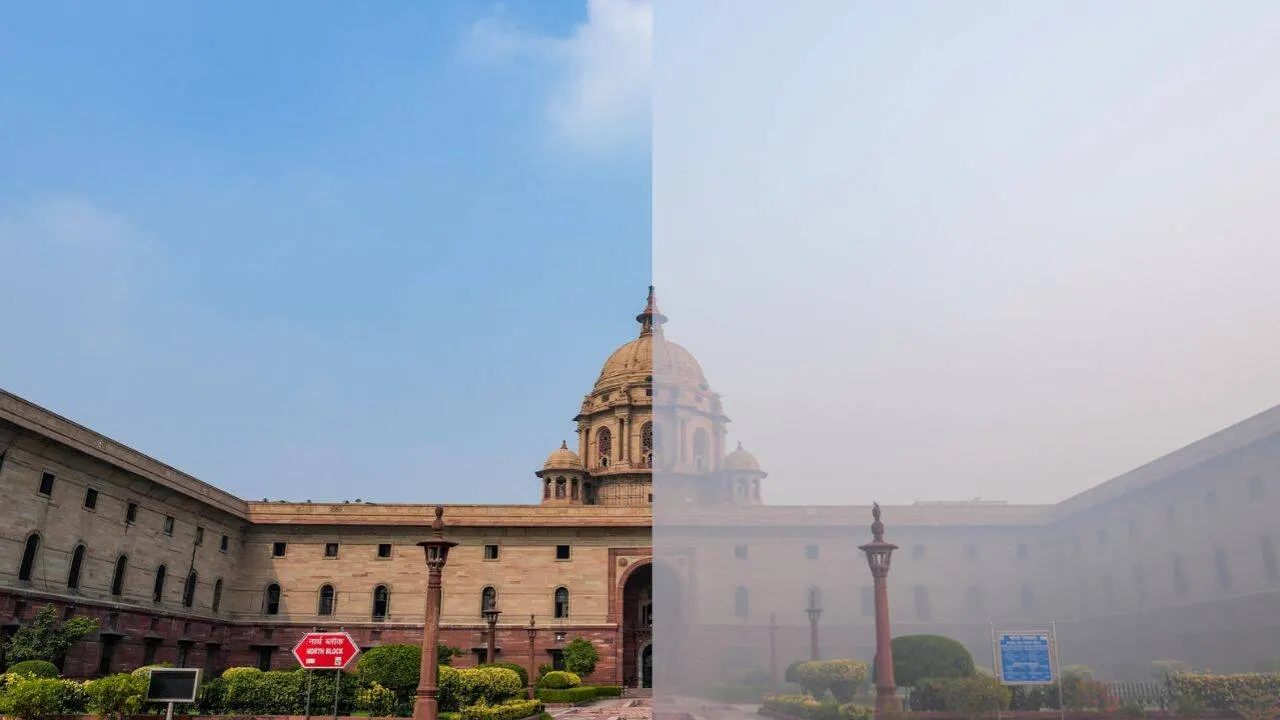
Same city, same night, wildly different numbers. On Diwali, the official air quality index (AQI) for Delhi, reported by the Central Pollution Control Board (CPCB, India's national pollution regulator), stayed below 400, with 373 the figure widely quoted. Some apps, though, showed readings as high as 1,747. So which one was right?
What happened?
The official AQI never crossed 400. But the raw data told a harsher story. At Jahangirpuri, PM2.5 (fine particles that reach deep into your lungs) hit 4,985, before the Delhi Pollution Control Committee (DPCC, the city's pollution body) later revised the reading.
DPCC data also showed a peak AQI of 3,744 and a worst-hour average of 1,480. That suggests the official figure understated how bad the air got. Some monitors also went dark just as pollution surged, leaving gaps exactly when the numbers mattered most.
Why do the numbers differ?
There are two main reasons. First, India and the US calculate AQI using different methods, so the same air can produce different scores. Apps that follow the US approach will not match the CPCB number.
Second, not every platform uses the same data. Some rely on official monitors, others on different sensors, and the reliability of each source affects the final reading. When a monitor goes offline or a value is later corrected, the gap widens.
What's next?
The air did ease a little afterwards. Delhi's AQI improved to the "poor" category at 299, though Loni in Ghaziabad stayed at a choking 470. Two days after Diwali, the city's smog was thick enough to be seen from space.
This is a familiar fight. Last year, the Supreme Court allowed limited sale and use of green crackers (lower-emission fireworks) in Delhi-NCR, and the air still turned "very poor" after Diwali 2025. This time, Congress president Mallikarjun Kharge has questioned Prime Minister Narendra Modi over the recurring crisis and asked for an account of the measures taken.
Until the data gaps are explained, expect the argument over which number is real to continue.
Story timeline
Delhi post-Diwali smog and air pollution · 4 updates
What happened before and after this story. Background events not previously covered were summarised by AI.
More in: News
See all →
Nvidia picks ex-federal prosecutor Jun Kim to lead probe into CEO Jensen Huang
French police raid Paris Ritz and two villas in Al Fayed abuse inquiry
US Army soldier, 41, arrested in Gloucester over alleged Russia-linked espionage