Brittany's 6,500-year-old tombs hide human-shaped giant stones, scans suggest
Archaeologists scanning huge burial mounds in Brittany, France, think more human-shaped standing stones are hiding underground, some 6,500 years old.
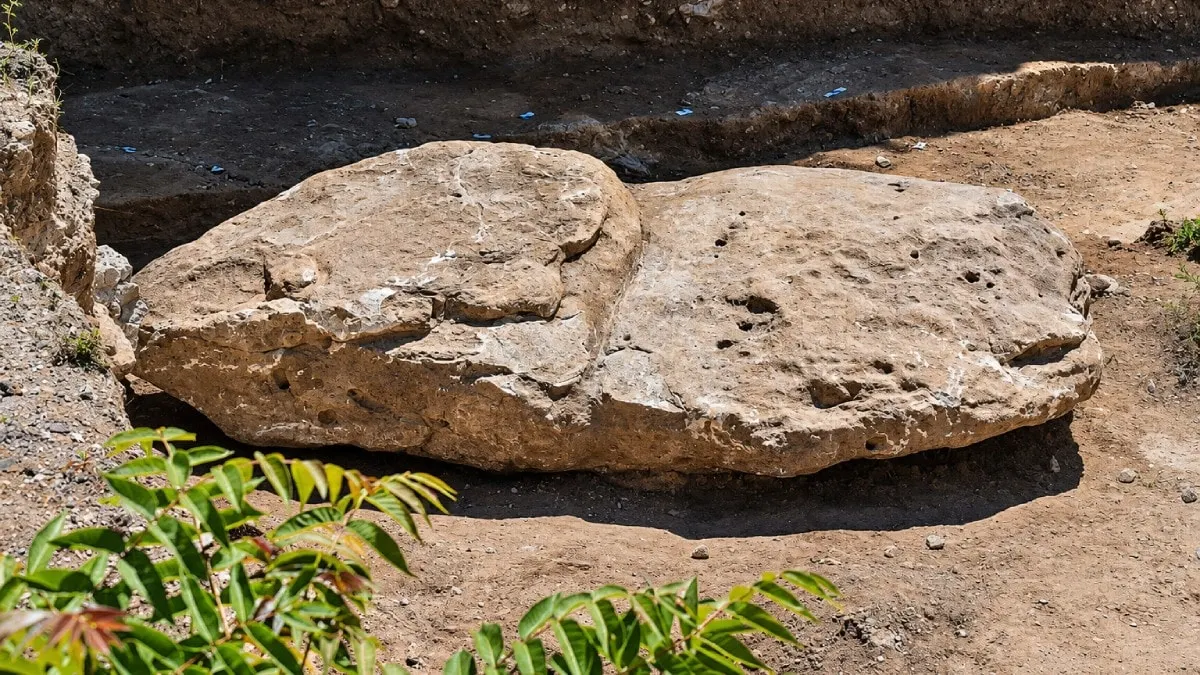
Imagine a stone roughly the weight of two elephants, carved into the outline of a person, then buried inside a tomb. That is what archaeologists keep finding in western France, and they now suspect there are more.
What happened?
Researchers are working at the Coëby burial site near the town of Trédion, in Brittany. So far, 95 prehistoric structures have been identified there, including standing stones, passage graves (tombs with a stone-lined entrance corridor) and earth mounds.
The most striking finds are giant standing stones shaped like human silhouettes. One of them weighs around 10 tons.
Some of the mounds are huge, reaching 80 metres long and 40 metres wide.
Why is everyone talking about it?
Because of where the stones were put. Standing stones are usually raised in the open air. These were placed inside burial mounds, which raises a big question: what were they for?
Archaeologists Philippe Gouézin and Vivien Mathé looked at two mounds, called TRED30 and TRED31, without digging. They used electrical resistivity measurements, a method that reads the ground by how it conducts electricity. The survey covered about 3,000 square metres.
The results point to dense clusters of stones under the soil, especially in the middle of the mounds. That could mean stone burial chambers or more standing stones.
Whether those stones are human-shaped is not yet clear.
What's next?
The researchers say the monuments resemble Passy-type tombs found in other parts of France, which date back about 6,500 years.
Further study is expected to shed light on how Neolithic (late Stone Age) communities buried their dead. It may also explain why they put giant stones inside the tombs.
For now, the answers are still under the earth.
More in: Curious
See all →
3,000 tarantulas hidden in worn socks: two Germans and a Pole arrested in Peru
Man stops by Polish police station for a breath test, runs into a shoe theft report

A luxury toilet is the prize at this LPGA event in Japan, and caddies want it