Berlin's ADIRA Drag Festival gives queer Arab artists a stage and a home
At the third ADIRA Drag Festival in Berlin, performers paid tribute to Arab divas. Co-founder Hassandra says community matters more than ever right now.
"Adira" is slang from queer culture in the eastern Mediterranean. It describes people with a strong presence, someone powerful and successful. In Berlin, it is also the name of a collective that is building a community.
What happened?
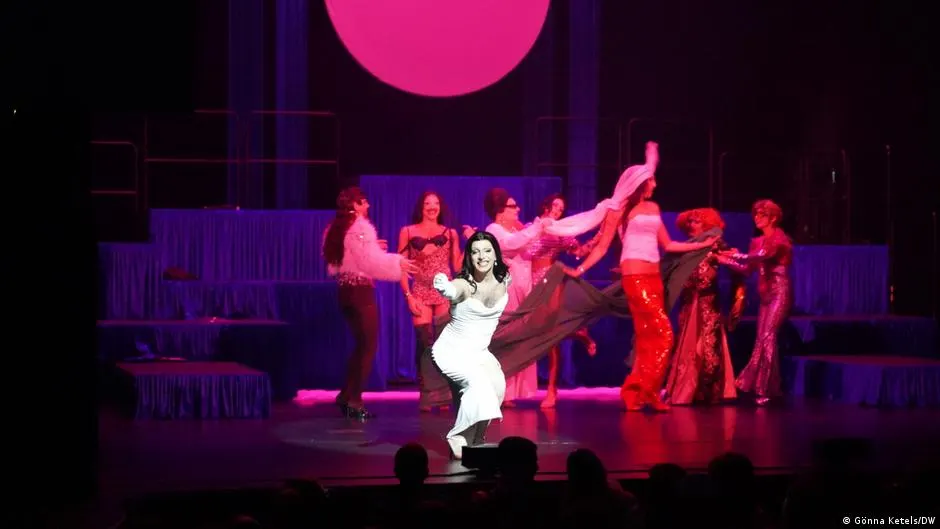
At the end of October, the ADIRA Drag Festival took place in Berlin for the third time. Its motto was "Who's Your Diva?!". Drag performers paid tribute to queer icons from the region, including Egyptian music legend Umm Kulthum, Turkish star Bülent Ersoy and Lebanese pop icon Haifa Wehbe.
Hassandra, who co-founded ADIRA and the festival, also took the stage. The role: Lebanese pop singer Elissa. Hassandra describes her music as romantic, raw and gentle, a bit like Adele. Her personality, however, is the opposite: direct and unfiltered.
Elissa has spoken up publicly for LGBTQ+ communities in the Middle East. Her firm views on other political issues have also repeatedly caused controversy in the Arab world. Hassandra deliberately addresses that in the show. "As queer people, we tend to idealise pop divas. But they are very imperfect," Hassandra says. Nobody should blindly follow a politician, a party, a diva or an activist.
Who is behind ADIRA?
Hassandra was born in Beirut in 1994 and studied theatre at the Lebanese University. In 2017, aged 22, Hassandra moved to Berlin on impulse, because Lebanon's economy was bad and prospects were thin. Berlin's independent art scene and queer nightlife followed, and drag became another way to express oneself.
In 2023, Hassandra founded ADIRA with Syrian-German DJ and cultural producer Zuher Jazmati, who also performs as xanax_attax. The asterisk in "Arab*" is deliberate. It includes non-Arab ethnic minorities and people with different identities and roots in Southwest Asia and North Africa.
Why does it matter right now?
Islamophobia and homophobia are rising, and the far right is gaining strength. Places like ADIRA give queer Arab people a sense of belonging and support. That feeling has become even more important since the deadly Islamist terror attack at the Christopher Street Day parade (Berlin's big LGBTQ+ pride march) in July.
Afterwards, Hassandra felt caught between identities. Queer Arab people suddenly face a lot of racism, Hassandra says. So it is important to say two things at once: we are sad about what happened, and we reject the racism that follows. Hassandra feels the Arab community is often made a scapegoat.
Hassandra wants to help make Germany "a safer place for everyone". The reasoning is simple: "There is room for everyone. It's a huge country."
Story timeline
Berlin's queer Arab ADIRA Drag Festival · 2 updates
What happened before and after this story. Background events not previously covered were summarised by AI.