Will the Kraków attack scare off tourists? What the research says
Studies of European cities hit by terror show hotel demand fell by about 10% and took almost four years to recover. Experts say Kraków's case may differ.
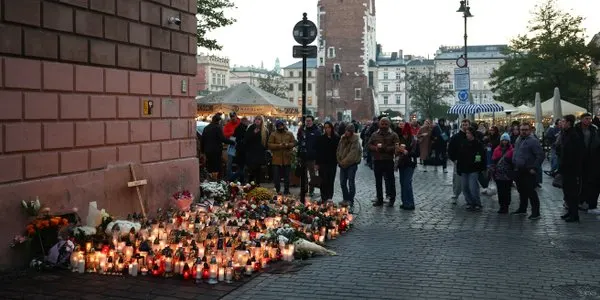
Six people died in Saturday's attack on Kraków's Main Square, among them citizens of the United Kingdom and Austria. The news travelled fast abroad, and one question is now being asked: will visitors stay away?
Researchers say it is too early to tell, and that simple comparisons can mislead.
What does the research show?
A study published in 2024 in the Journal of Travel Research looked at hotels in 29 European cities between 2010 and 2019. Seven of them, including Paris, Brussels, Nice, Berlin, London, Manchester and Barcelona, suffered serious terrorist attacks.
In those seven, hotel demand fell by about 10% on average. The worst effects came in the first six months, and a full recovery took almost four years. Room prices were around 17% lower, occupancy dropped by 8% and hotel revenue fell by 27% compared with a scenario without an attack.
The results varied a lot. Brussels, Nice and Barcelona were hit hardest, while Paris, Berlin, London and Manchester showed no clear, statistically significant decline.
Why Kraków may be different
One of the study's authors, Oriol Anguera-Torrell of the University of Barcelona, warns that the findings cannot be applied to Kraków automatically. The study covered jihadist attacks, and the gunman's motive in Kraków has not yet been established.
Marketing professor Sebastian Zenker of Copenhagen Business School says a single attack rarely changes a destination's image in the long run. How often attacks happen matters more than how big one is. He expects some cancelled bookings and extra caution in the short term, especially from distant markets that judge risk mainly by news reports. Cities such as Barcelona and Berlin, he notes, saw visitor numbers recover within months.
Kraków has a strong brand built on its history and culture. The UK is its biggest foreign market: around 670,000 British visitors came in 2025, more than a quarter of all foreign guests. British weekly The Spectator described the contrast with Poland's reputation as a very safe country, but also called the police response exemplary. Officers began pursuing the gunman 23 seconds after his first shots.
What's next?
The British Foreign Office updated its advice on 7 November to mention the shooting, but did not advise against travel to Poland. The Dutch foreign ministry keeps Poland at its green code, meaning normal travel.
Official advice does not decide what tourists do, though. The real picture will only emerge from data on new bookings and cancellations in the coming weeks.
Story timeline
Kraków Main Square attack aftermath · 10 updates
What happened before and after this story. Background events not previously covered were summarised by AI.
More in: Travel
See all →
Vande Bharat sleeper trains now run on three routes, and four more rakes are coming

Delhi launches electric Yamuna river safari: 35-minute cruise for ₹500
Flying Ryanair with a bag? Baggage drop now closes an hour before takeoff