Did TikTok fuel the French protest violence? A study of 1 million videos says not much
Researchers analysed nearly a million TikTok videos about France's youth and cost-of-living protests. They found little sign that the app was used to coordinate violence.
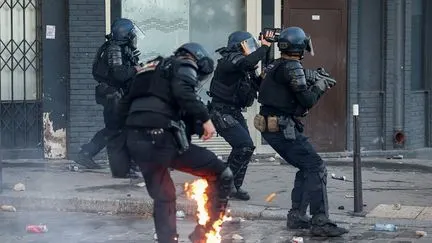
Did social media help drive the violence around France's recent protests? The government says yes. A new study suggests TikTok's role was far smaller than claimed.
What did the government say?
On 27 October, Interior Minister Laurent Nuñez said looters on 17 October had "alerted and guided" each other on social media. The government even considered suspending access to some platforms for a time.
The Interior Ministry then set up a unit to flag content calling for insurrection. Prime Minister Sébastien Lecornu summoned the platforms and asked them to better prevent illegal content urging violence, damage and looting. Justice Minister Gérald Darmanin asked prosecutors to seek extra penalties, including bans from social media, for people convicted.
What did the researchers find?
The study comes from Cepremap, a French economics research centre, and was published on 3 November. Its three authors, experts in computational social science and political sociology, looked at nearly one million public videos from 1 September to 29 October. Together they had 16 billion views and 4.5 million comments.
They confirm that calls to mobilise spread widely. The date of 17 October gained visibility as early as 8–10 September, before the first press articles. Videos peaked on 1 October (school protests) and 17 October (the wider youth movement).
But "traces of coordinated violence remain very limited". Only 8% of the schools blockaded at the start of the student movement had been named in a video before images of their blockade appeared. Violent footage made up 14% of views, and more than half of that came from news media. Demands (32%) and humour (31%) drew more views.
In the comments, videos showing violence were condemned almost ten times more than celebrated. Explicit calls for violence made up 0.27% of comments. The team also found no sign of major artificial amplification, whether from foreign interference or AI.
What are the limits?
The authors stress that they cannot rule out coordination in private messaging apps or on other platforms. Still, they say the data does not support the claim that TikTok was used to coordinate violent acts. They question whether restricting social media would even prevent violence.
What's next?
The study lands as the debate over restricting platforms continues. It follows the 17 October protests and the huge 5 November march, which unions put at 1.6 million people and the Interior Ministry at 575,000.
Story timeline
French nationwide cost-of-living protests · 5 updates
What happened before and after this story. Background events not previously covered were summarised by AI.
More in: News
See all →
Could smoky bacon crisps be banned? Minister tells host to 'get a life'

Bird flu antigen found at duck farm in Jangheung, triggering 24-hour standstill

Erdoğan on the flight home from Seoul: Azerbaijan trip, Putin call and more