Smartphone prices jumped 14% as the AI boom starves phones of chips
Global smartphone prices rose 14% in the first quarter as AI data centres soak up memory chips. Here's why your next phone may cost more.
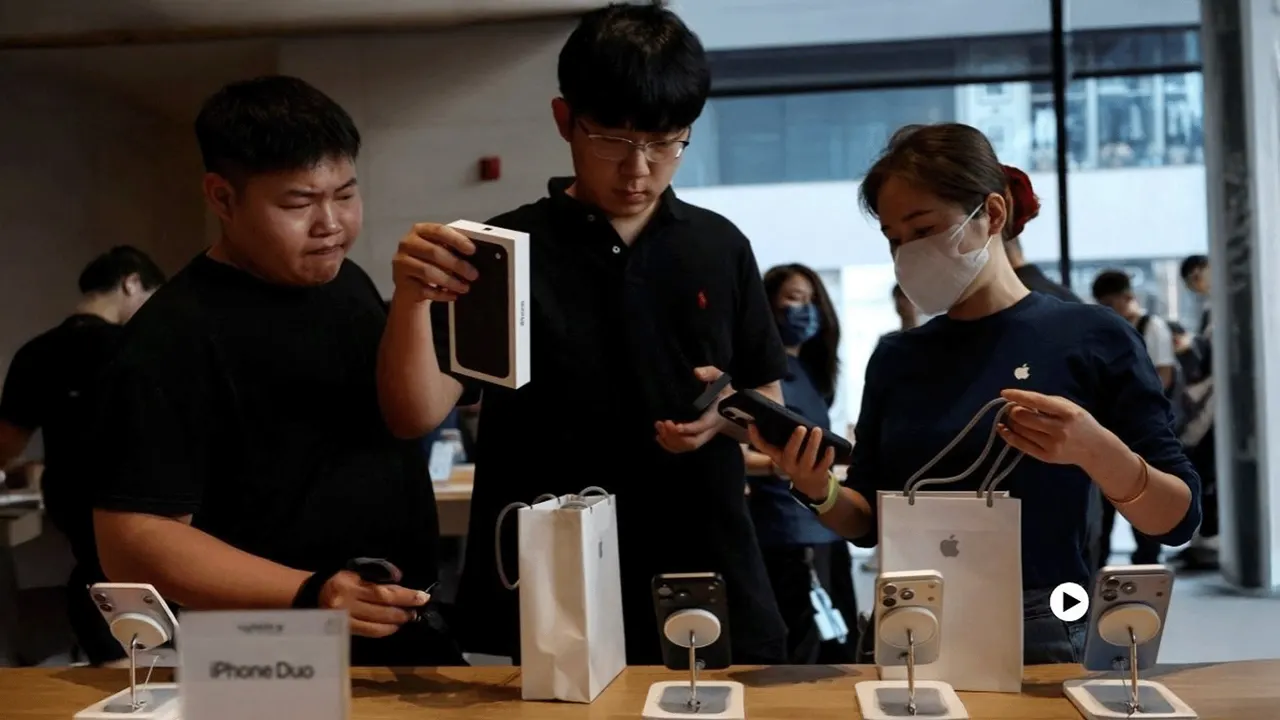
The chip shortage is no longer just a problem for factories and tech giants. It has reached your pocket: global smartphone prices rose 14% in the first quarter of this year.
What happened?
Demand for chips, driven by the AI boom and new data centres, is racing ahead of what factories can produce. The squeeze is tightest on high-bandwidth memory (HBM), where demand is up 200% compared with available capacity. SK Hynix is one of the key producers.
The whole chip market is worth about $1 trillion. Apple and Samsung now compete with Nvidia and the big AI firms for a limited supply of memory, which leaves less for phones and PCs.
Why can't factories just make more?
AI expert Mohammad al-Khawaja says the gap was expected about two years ago. He cites the CEO of TSMC (Taiwan's chip giant), who estimated a shortfall of 25 to 30% this year or in 2027.
Software and apps scale up fast and cheaply. Chip plants need huge factories, power grids and infrastructure, so supply grows far more slowly than demand.
Jack Silverman, a semiconductor analyst at Bloomberg Intelligence, adds that makers of phones and PCs run on thin margins. Unlike high-margin Apple, many can't absorb higher component costs, so part of the bill lands on shoppers.
Where is the money going?
Morgan Stanley estimates five big tech firms will spend about $4.2 trillion between 2026 and 2030. Amazon leads with roughly $220 billion, followed by Alphabet at $205 billion, Microsoft at $170 billion and Meta at $145 billion.
OpenAI and Anthropic took 43% of all venture funding worldwide in the first half of the year. Yet in a PwC survey, 56% of CEOs said their companies have seen little financial benefit from AI so far.
Wasn't this déjà vu?
Sort of. The 2021 global chip shortage hit carmakers and electronics. In November 2025, memory prices jumped as AI data centres absorbed DRAM and HBM supply.
What's next?
TSMC expects the chip market to pass $1.5 trillion by 2030, with AI and high-performance computing taking 55% of it. Phones and devices would get 20%.
Al-Khawaja says it's still unclear when the investments will turn into profit, though big results are expected by 2030. For now, the pressure on phone prices looks set to continue.
Story timeline
AI boom chip shortage lifts smartphone prices · 3 updates
What happened before and after this story. Background events not previously covered were summarised by AI.
More in: Tech
See all →
Kolmar Korea's AI lip color maker wins top CES beauty award

Sony's new PlayStation Portal has built-in storage, but only in Japan

GTA 6 pre-download is live: 13 years of waiting end on 19 November