Record seven Muslims win seats in Congress, including a first in the Senate
Seven Muslim candidates won seats in the US Congress in the midterms, a record. Here's who they are and why voters backed them despite a wave of attacks.
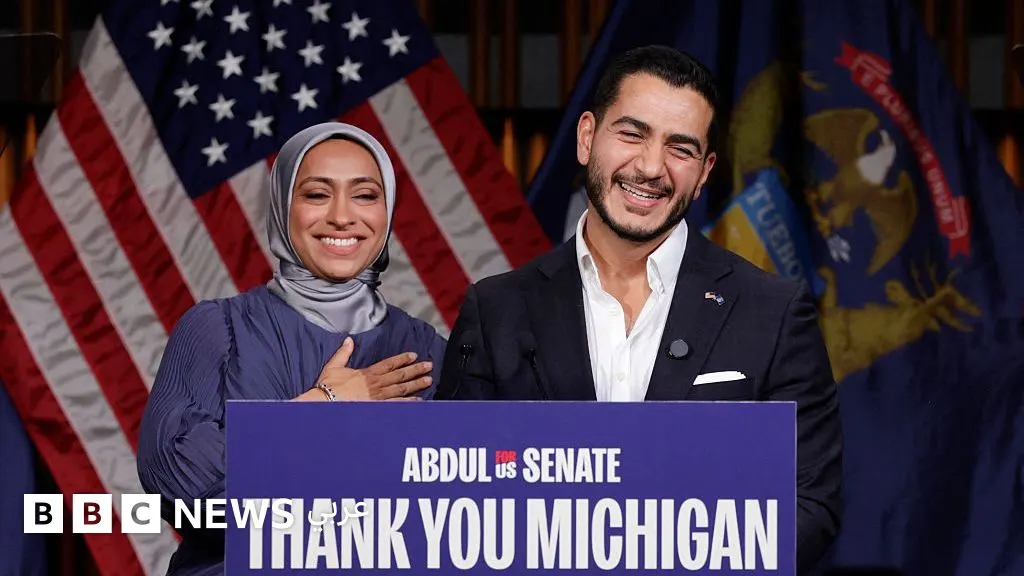
Seven Muslim candidates have won seats in the US Congress, the largest number ever elected in a single vote. The results from Tuesday's midterm elections (the US vote halfway through a presidential term) also include a first for the Senate.
What happened?
Six of the winners are in the House of Representatives and one is in the Senate. The biggest name is Democrat Abdul El-Sayed, an American of Egyptian descent, who won in Michigan and becomes the first Muslim ever elected to the Senate.
In New Jersey, surgeon Adam Hamawy, also of Egyptian descent, won the 12th District and is the first Muslim to represent the state in Congress. He drew attention after volunteering to treat wounded people in Gaza in 2024, and he previously served as a US Army doctor.
In New York, Darializa Avila Chevalier, a Muslim of Dominican descent, won the 13th District. She is the first Latina Muslim woman elected to Congress.
Four Muslim incumbents kept their seats: Rashida Tlaib (Michigan), Ilhan Omar (Minnesota), André Carson (Indiana) and Latifa Simon (California). Non-Muslim Arab Americans also won, including Republican Darin LaHood in Illinois and Democrat Dan Kuo in Massachusetts.
Muslim and Arab candidates also won state legislature seats, including Abir Kawas in New York and Nabeela Syed in Illinois.
Why does it matter?
Earlier this week, Americans were googling "habibi" after El-Sayed's victory speech. His race was also one of the nastiest. President Donald Trump, Vice President JD Vance and several Republicans attacked him with claims of links to extremist groups. He denied them, and no evidence has surfaced.
"You chose hate, and Michigan chose hope," El-Sayed told his Republican opponent, Mike Rogers. He added that he ran to be the next senator from Michigan "who happens to be Muslim", not to be a symbol.
Hamawy had a message for Muslim kids: "This is your country." Omar, who won a fifth term, said: "We will not let Trump silence us."
What helped them win?
Part of it is the Democratic momentum in these midterms. Democrats won a majority in both chambers of Congress.
El-Sayed focused on living costs, healthcare and limiting the influence of big corporations and lobbyists. Reuters reported that Michigan voters said the economy mattered more to them than the attacks on his faith.
Most winners also ran door-to-door style campaigns built on direct contact with voters. And more people ran: over 160 Muslim candidates stood at all levels this year, up from about 145 in 2022, according to data from the Council on American-Islamic Relations.
What's next?
The big question is whether these wins turn into real influence on immigration, civil rights, healthcare and foreign policy. Another is whether this marks a lasting shift, or just a product of the 2026 midterm mood.
Story timeline
Abdul El-Sayed’s Michigan Senate victory · 2 updates
What happened before and after this story. Background events not previously covered were summarised by AI.
More in: News
See all →
Could smoky bacon crisps be banned? Minister tells host to 'get a life'

Bird flu antigen found at duck farm in Jangheung, triggering 24-hour standstill
Erdoğan on the flight home from Seoul: Azerbaijan trip, Putin call and more