Hingot War in Indore: 20 injured as villagers hurl burning fruit shells
A 300-year-old post-Diwali ritual in Gautampura, near Indore, left 20 people injured on Monday. Here's what the Hingot War is and why it continues.
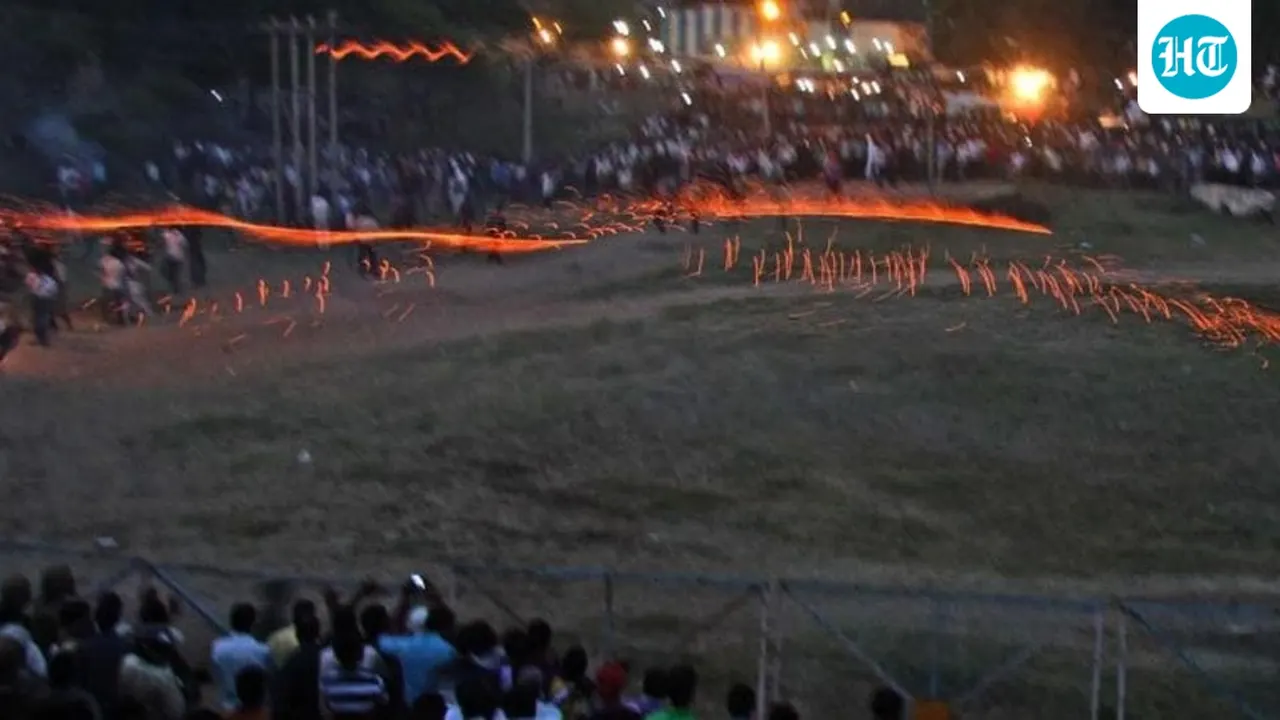
Two groups, one field and hundreds of burning, gunpowder-filled fruit shells flying through the air. The traditional Hingot War in Madhya Pradesh left 20 people injured on Monday evening, a health official said.
What happened?
The clash took place in Gautampura town, about 55 kilometres from Indore, on the day after Diwali. Block Medical Officer Dr Vibha Nagar said 20 participants were hurt.
Six of them were admitted to a primary health centre. The other 14 had minor burns, were given first aid on the spot and sent home.
A large crowd came to watch. Officials said high nets and barricades were put up around the field, and drones and CCTV cameras monitored the scene. More than 250 people were on duty, including police and members of the city security committee, with fire engines and ambulances on standby.
What exactly is the Hingot War?
Hingot is a wild fruit about the size of a gooseberry. It is hollowed out, dried and packed with gunpowder. When lit, it shoots off like a small rocket and can travel a long way.
The fighters from Gautampura form the "Turra" group. Those from Runji village lead the rival "Kalangi" group. Each side fires burning Hingots at the other.
Locals say the tradition is around 300 years old and dates back to the time of the Holkar dynasty, which once ruled Indore. According to legend, local guerrilla fighters secretly fired Hingots at Mughal cavalry to stop them entering the Holkar kingdom's borders.
Why does it still happen?
People get hurt in the Hingot War every year, and over the years some have died from severe burns. Even so, it is believed the local administration cannot ban it because the ritual is tied to the religious beliefs of local people.
That is why the focus stays on safety measures rather than stopping the event. This year, those measures included nets, barricades, cameras and emergency teams ready at the field.
More in: Society
See all →
Bursa builder with Thessaloniki roots turns heads for his Atatürk likeness

He sent 67,500 lira for a loaf of bread, and the kiosk owner paid it back
A French 8-year-old insulted Macron on live radio: should parents worry?