France's public-sector unions call a new strike for 17 November over pay
Six unions want civil servants to walk out on 17 November, demanding higher pay and an end to a fourth year of frozen salaries. Two big unions haven't signed on.
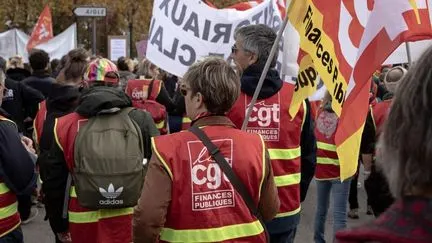
Another strike day is coming in France. A joint front of public-sector unions is calling for strikes and protests on 17 November, mainly to demand higher pay.
The call was announced in a statement on Monday 9 November. It is signed by CGT, UNSA, FSU, Solidaires, CFE-CGC and FAFP.
What happened?
The unions say it is "not acceptable" for the point d'indice (the value used to calculate civil servants' pay) to stay frozen for a fourth year. With inflation still rising, they argue, a pay rise is unavoidable.
They are asking for a significant increase in the index point and for it to be indexed to inflation. They also want a quick overhaul of the pay scales, so that careers are revalued for everyone.
Sophie Binet, head of the CGT, went further. After a social conference at Matignon (the prime minister's office), she urged "all employees, retirees and young people" to make 17 November another big day of strikes and demonstrations. "As long as wages don't rise, the mobilisation will continue," she said.
Who is not on board?
Two major names are missing from the list for now: Force ouvrière, the second-largest union in the public sector, and the CFDT, the third.
What came before?
On 5 November, more than 10% of state civil servants went on strike. The figure was 6.10% in local government and 4.97% in hospitals. France has 5.8 million public employees in total.
The government has just announced a 1.6% rise in the minimum wage (the smic), taking it to 1,502 euros net on 1 December. The CFDT called that "insufficient", and the CGT called it "crumbs".
What's next?
Public-sector unions will be received by the prime minister on Friday. The 17 November strike is set to follow.
Story timeline
French public sector wage strike · 2 updates
What happened before and after this story. Background events not previously covered were summarised by AI.
More in: News
See all →
Sonia Gandhi's memoir reveals two secret cancer scares and surgeries abroad
Slovak couple on a birthday trip tried to save a wounded woman in Kraków
Renfe drivers' strike hits Madrid and Barcelona commuter trains on Tuesday